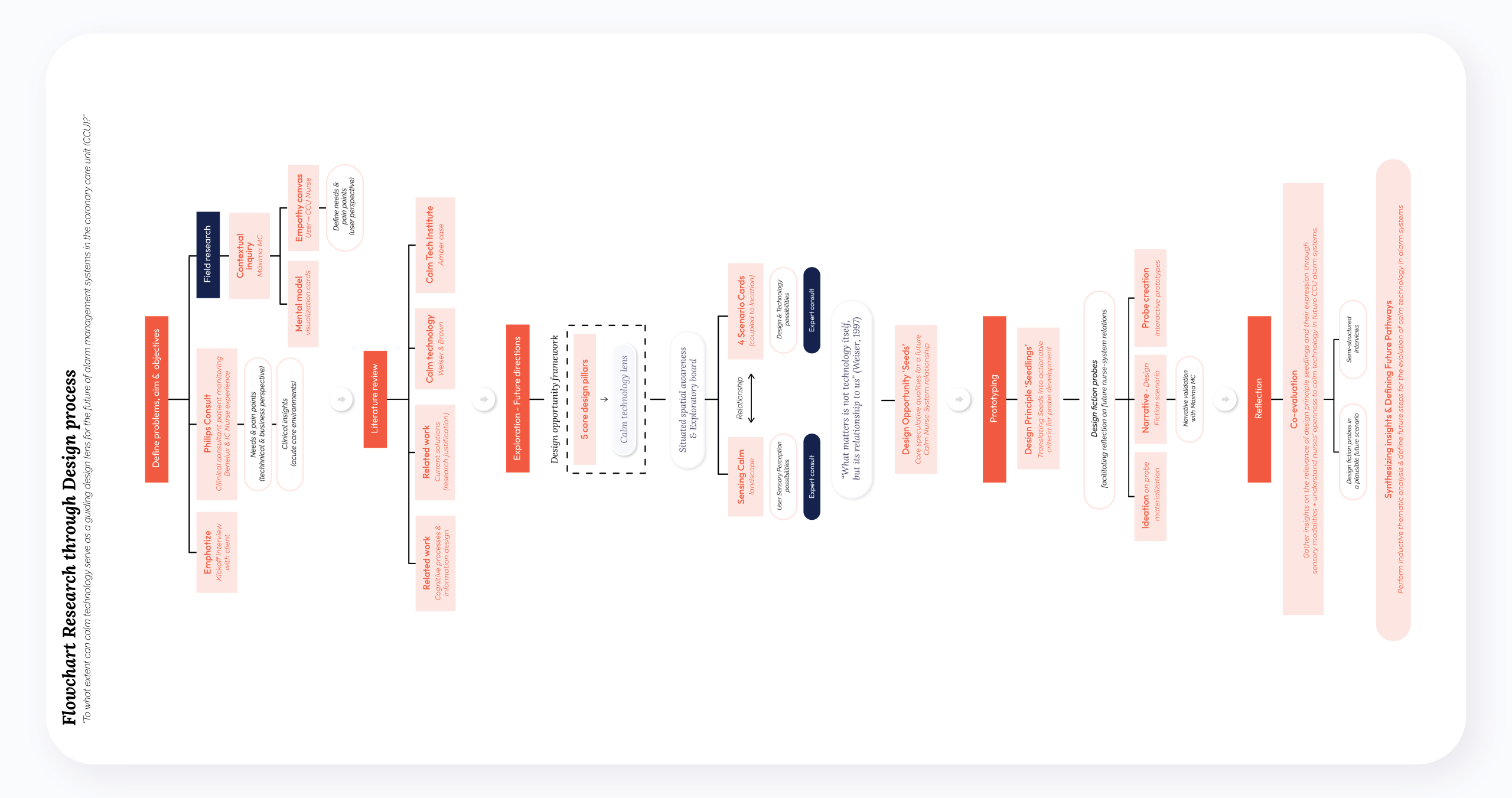
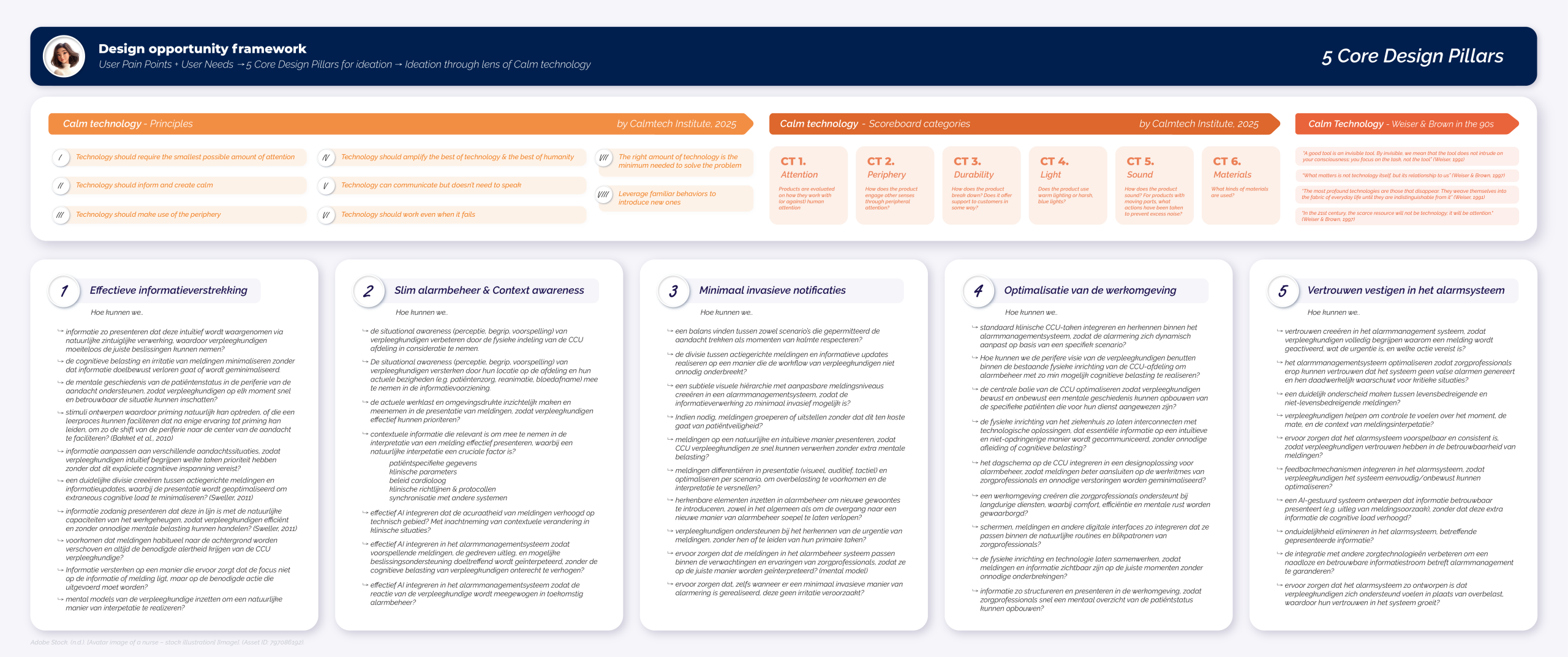
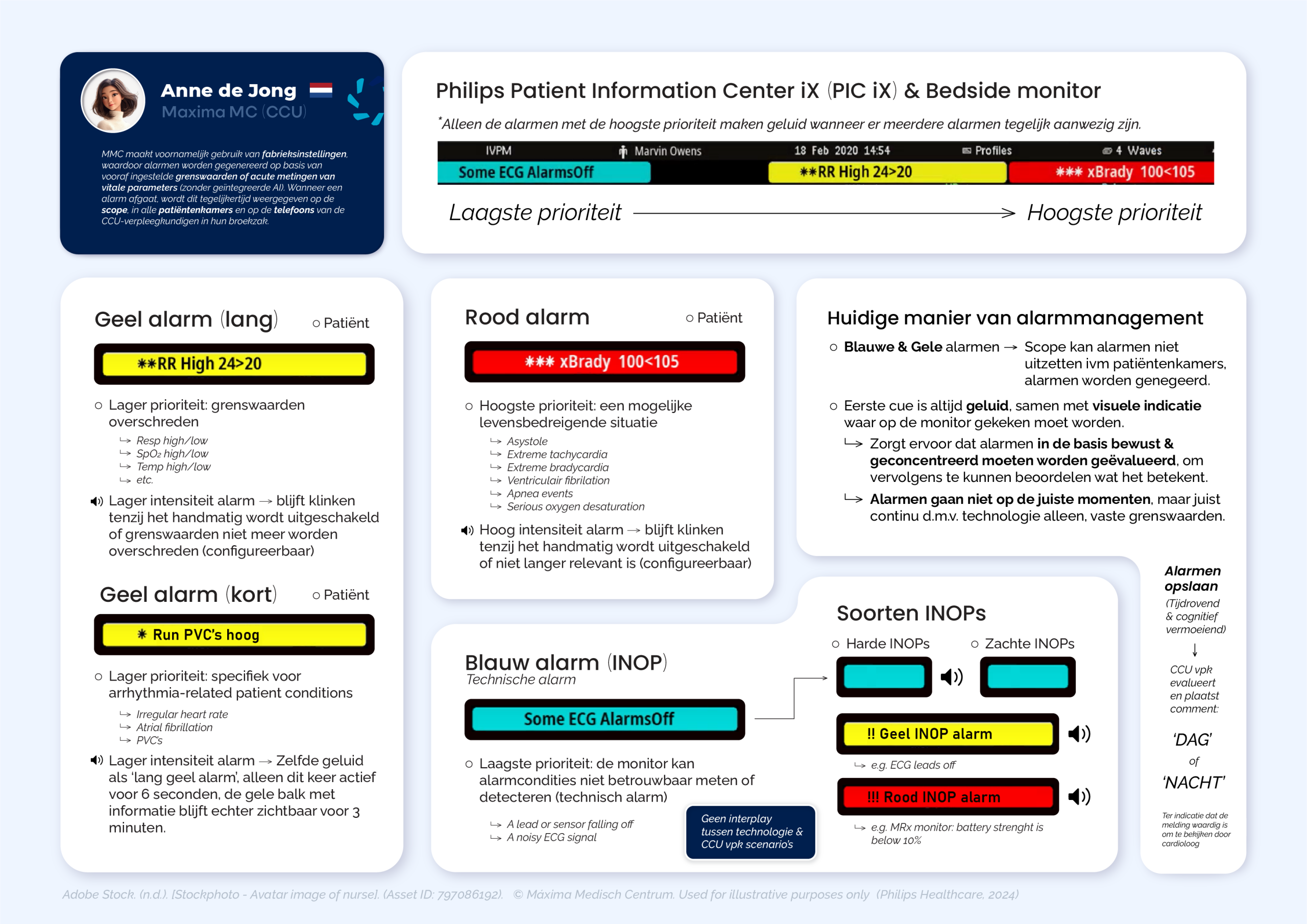
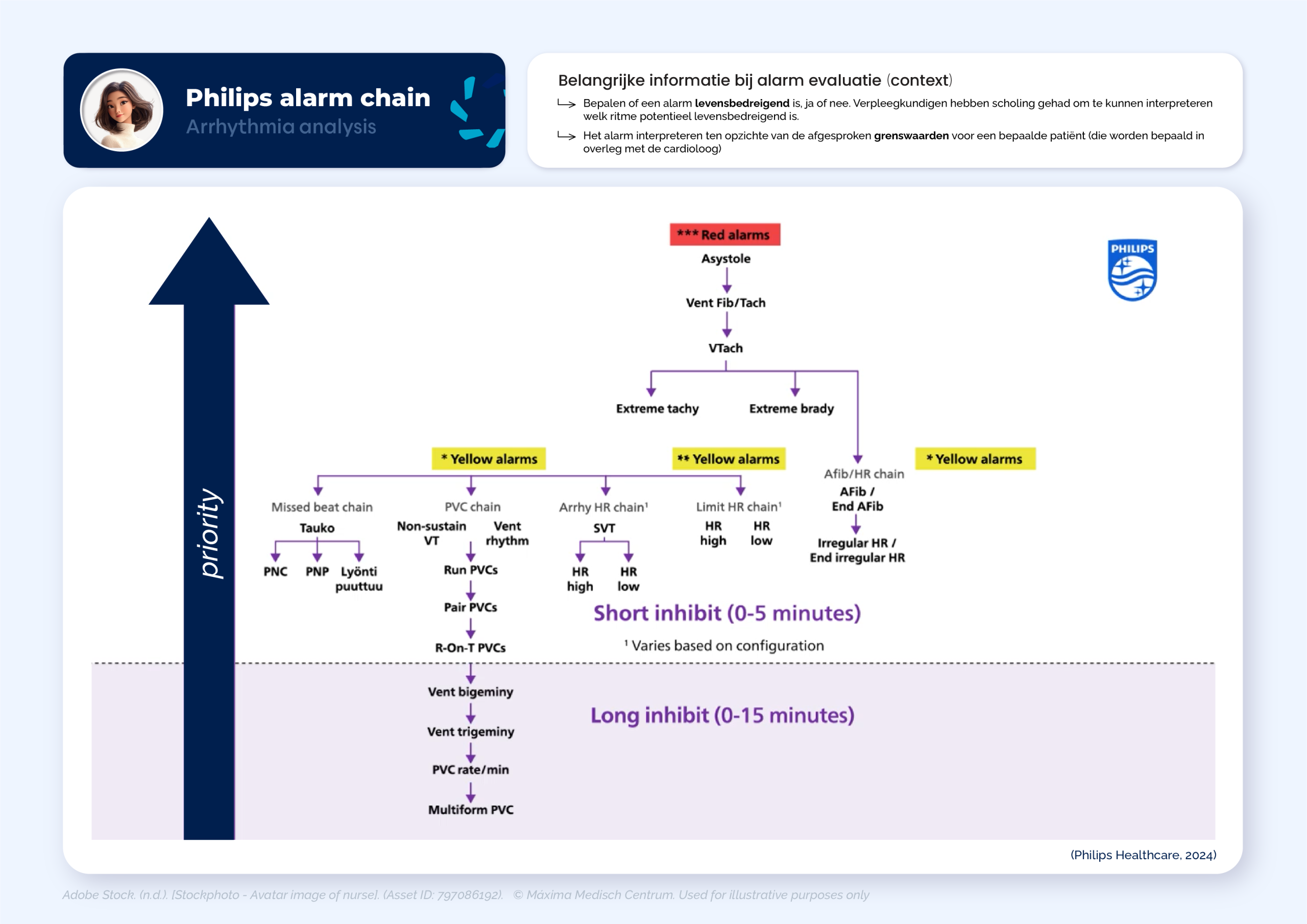
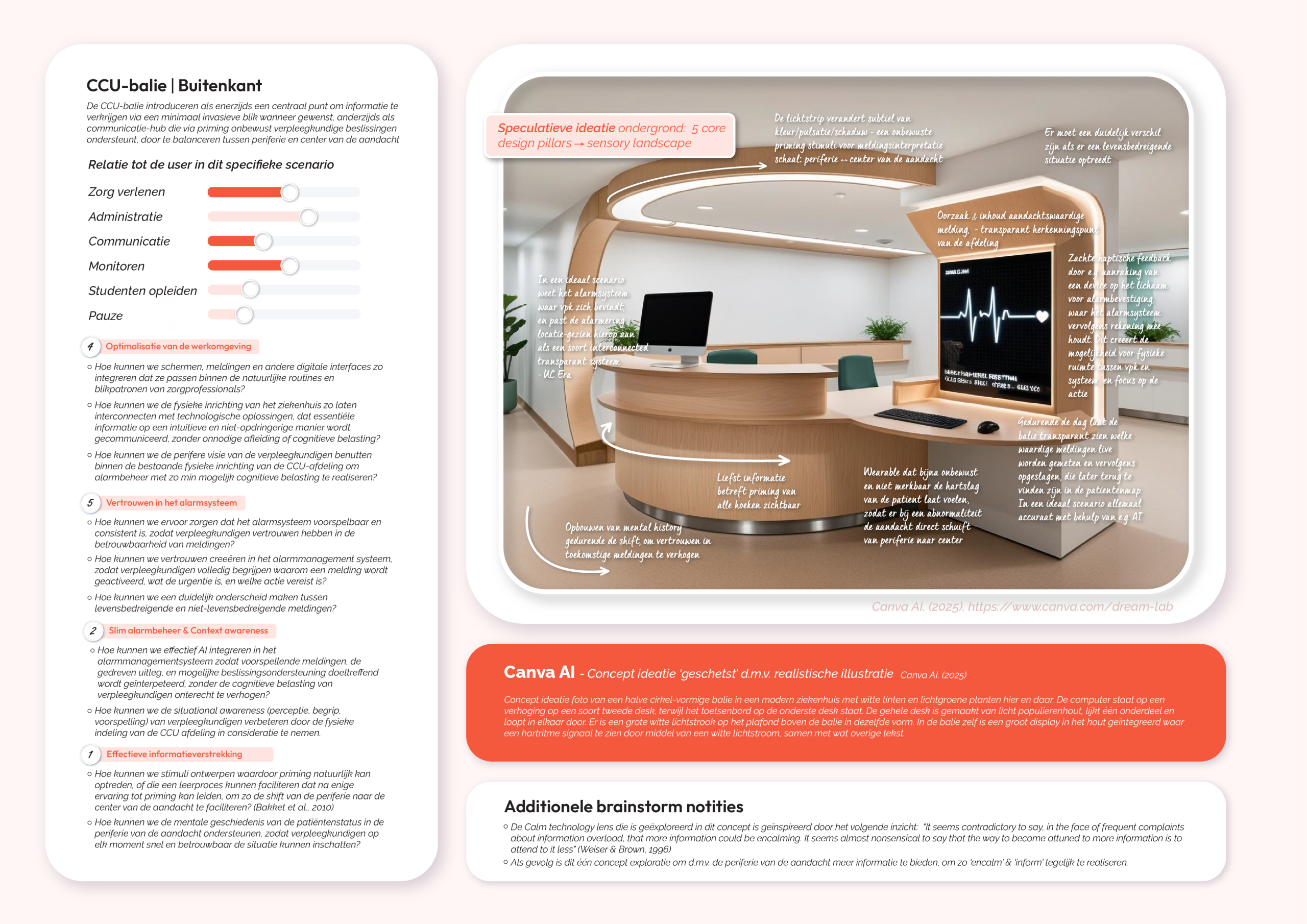
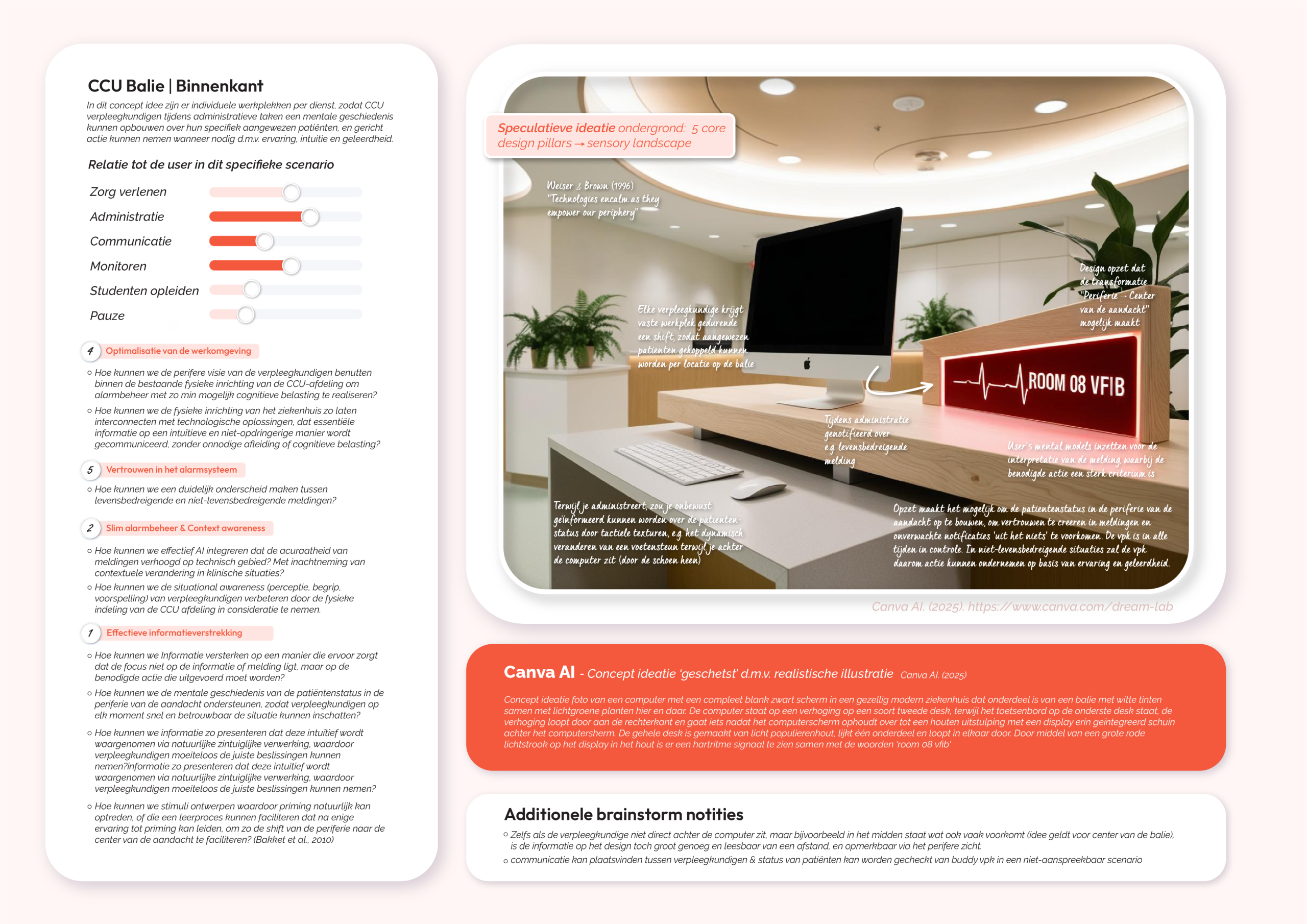
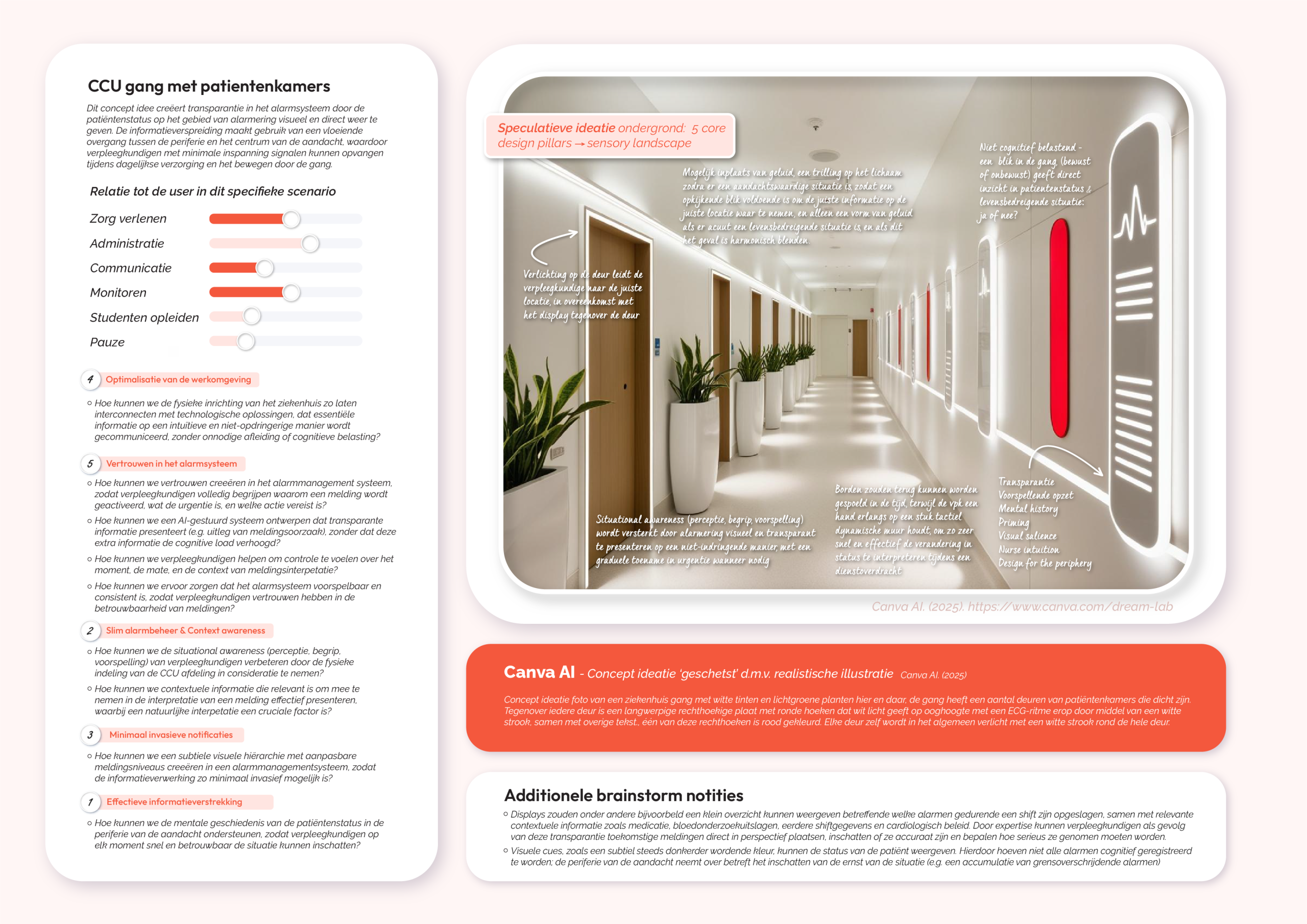
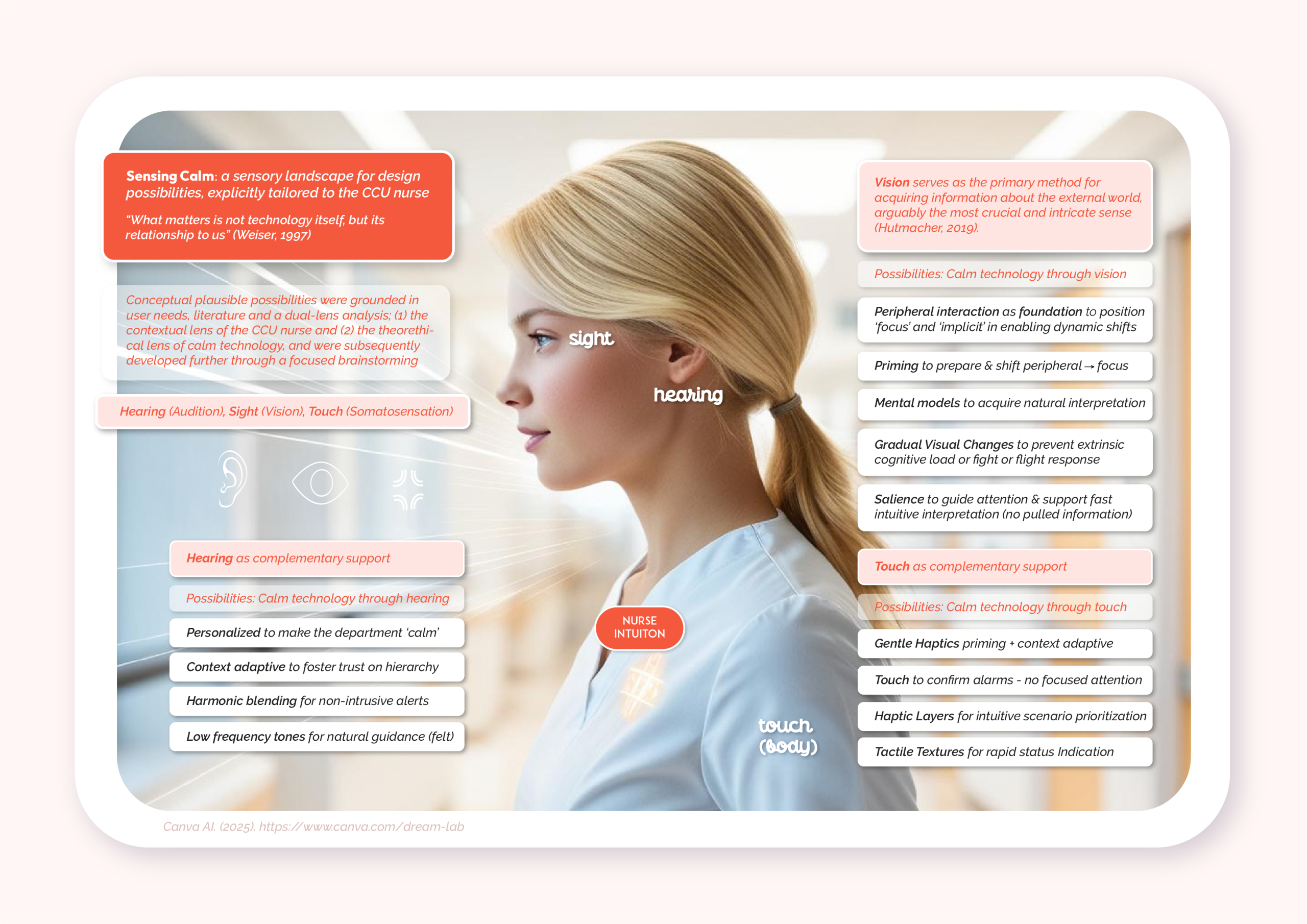
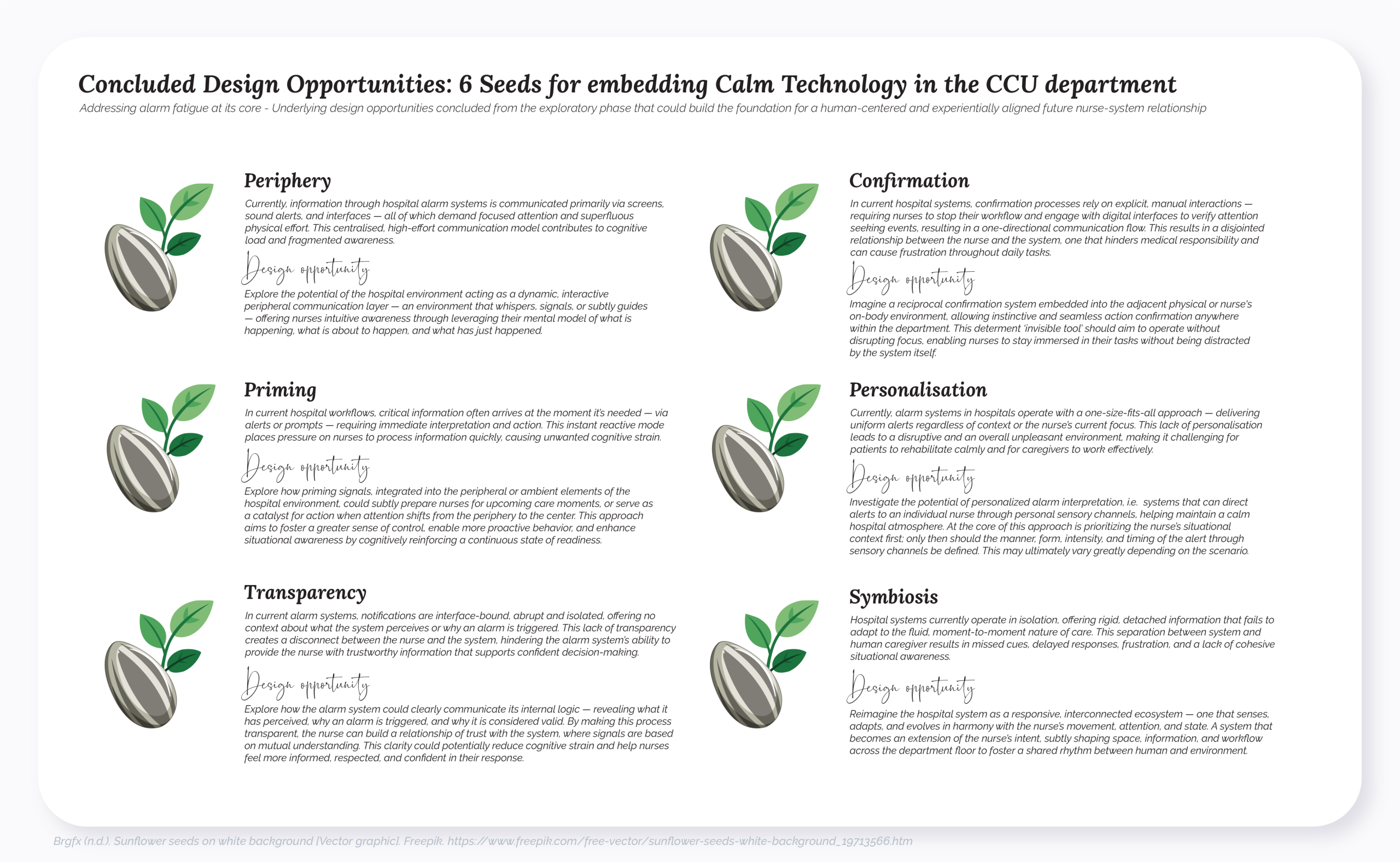
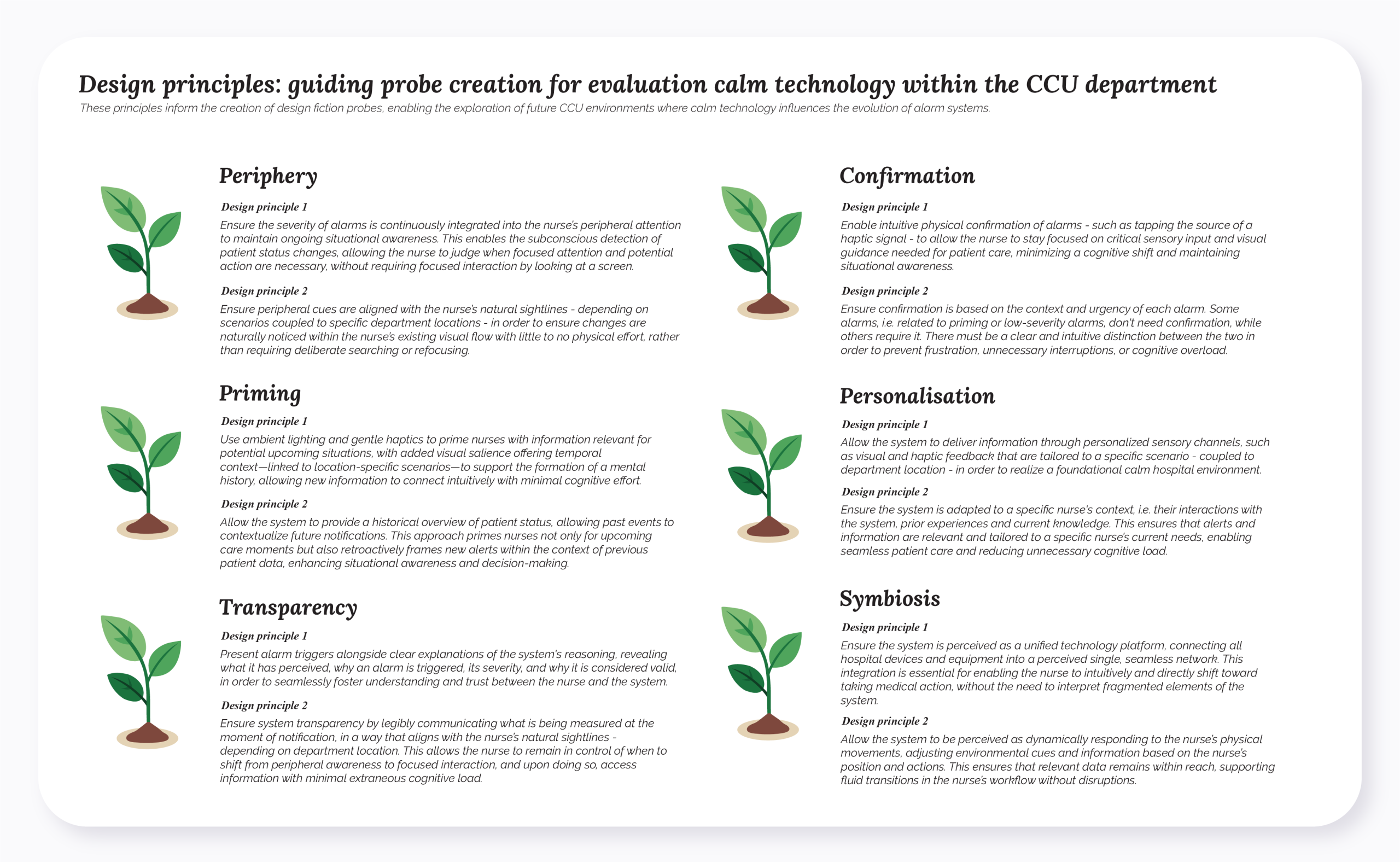
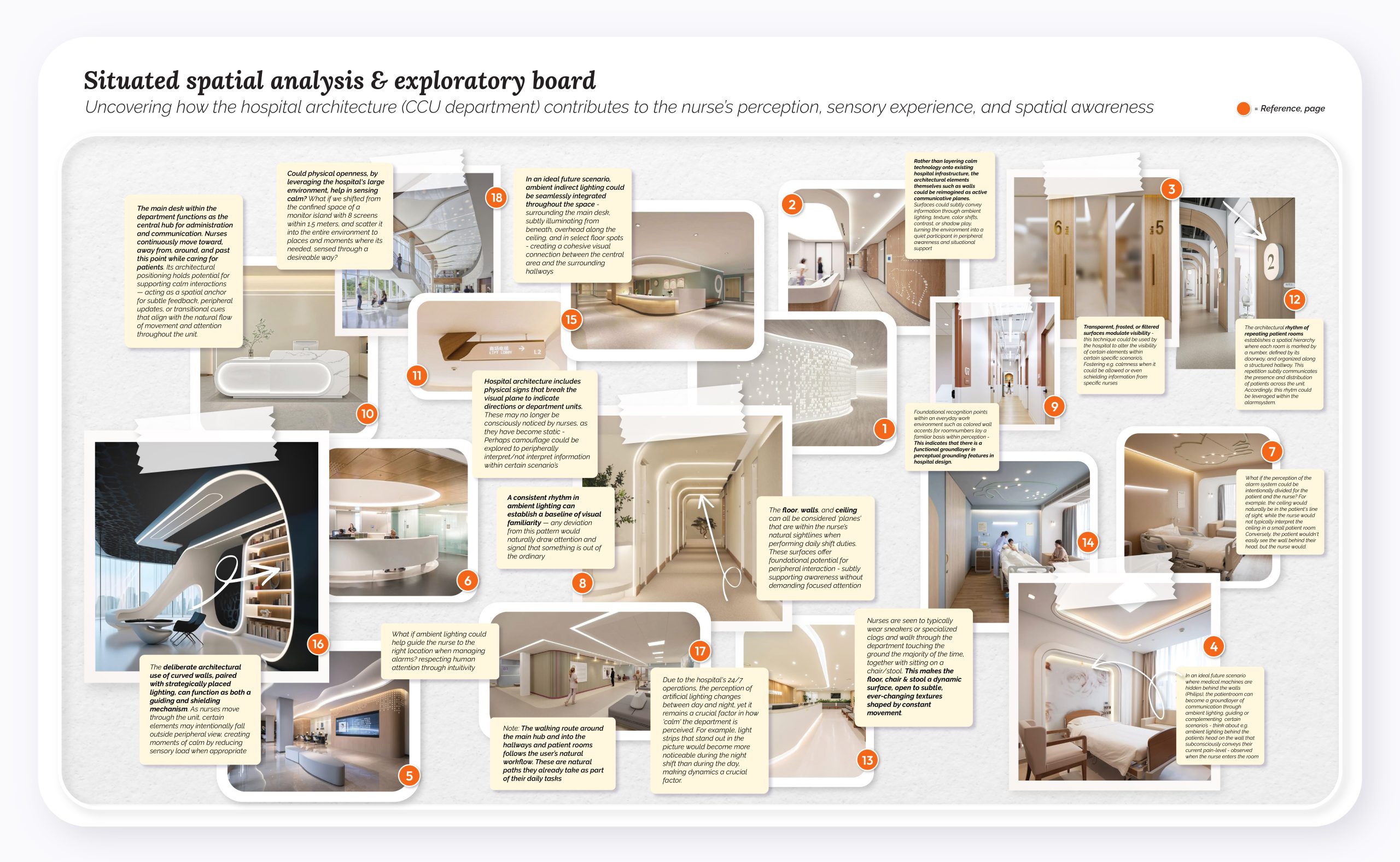
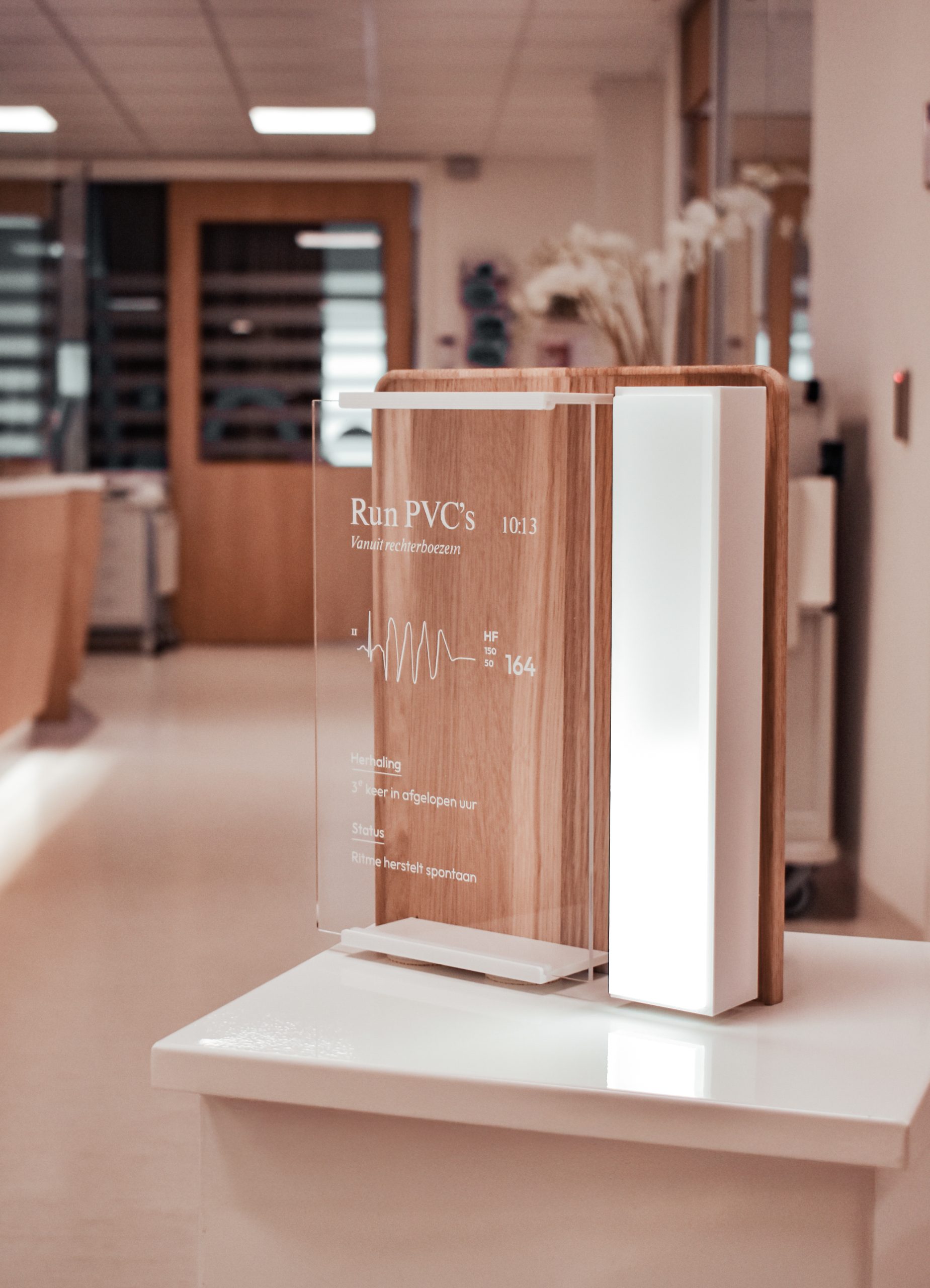
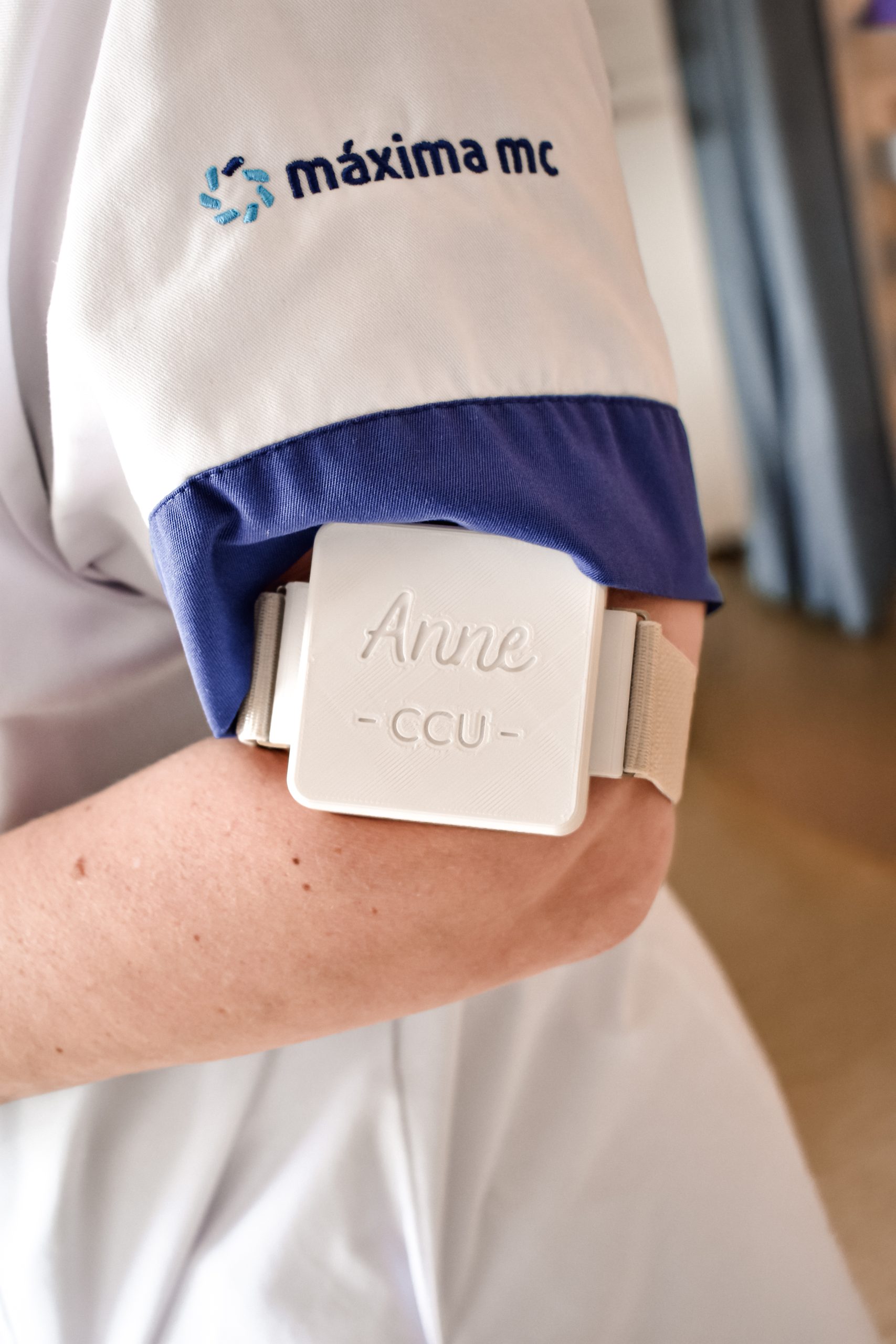
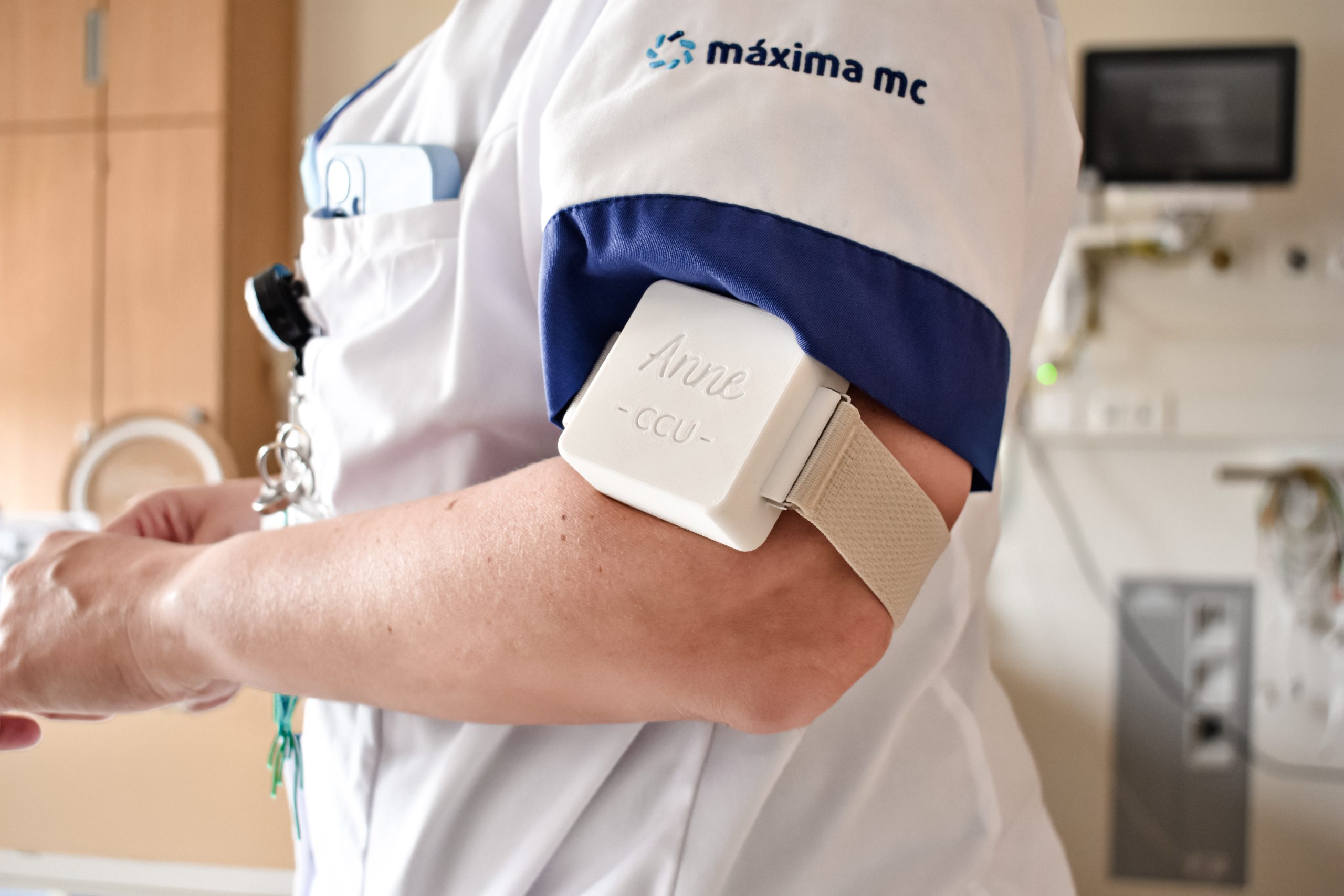
Hospital alarm systems are critical for patient safety but are frequently associated with alarm fatigue, cognitive overload, and reduced situational awareness among nursing staff. This thesis explores the potential of calm technology principles to guide the design of future alarm systems that better support nurses’ workflows and well-being in intensive care environments. Grounded in an in-depth analysis of the current challenges nurses face, six design possibility seeds – Periphery, Priming, Transparency, Confirmation, Personalisation, and Symbiosis – were developed to capture key interaction qualities aligned with calm technology. Using a Research through Design approach, these seeds informed the creation of fictional design probes: speculative, tangible artifacts that embody future alarm interactions via visual and haptic sensory modalities.
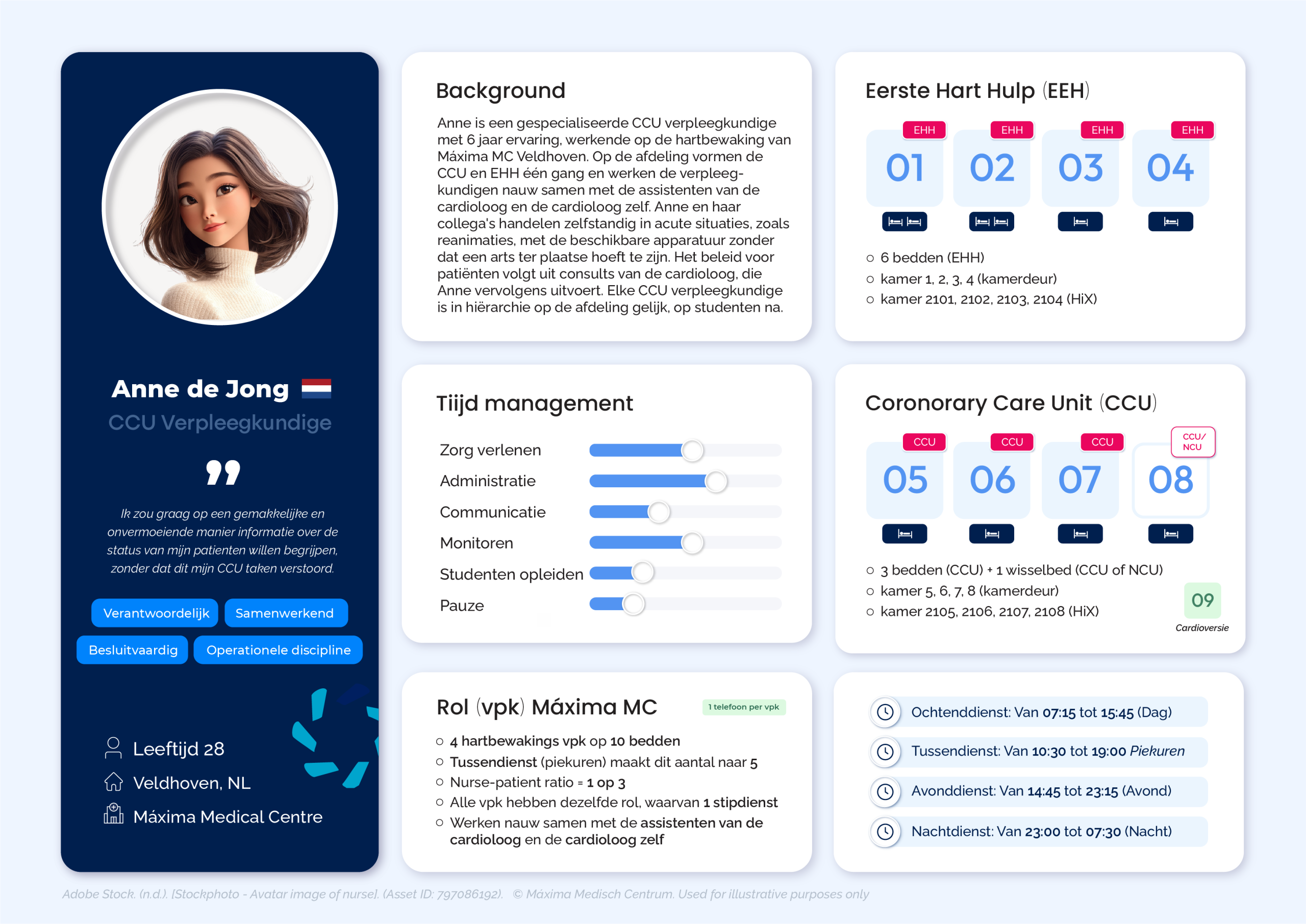
These probes were employed in a co-evaluation study with specialized CCU nurses at Máxima MC, using scripted scenarios to stimulate reflection and dialogue about potential futures. The findings contribute both conceptual and practical knowledge for the design of hospital alarm systems, demonstrating how calm technology principles can be translated into context-specific, embodied interactions that mitigate extrinsic cognitive load. In conclusion, calm technology principles are generally well-received by nurses, though not without critical remarks. These insights underscore the potential for companies like Philips to explore and implement calm technology principles in future alarm system designs such as the CCU — and potentially other acute care settings with similar cognitive demands.
PROJECT
FMP | Research project
CLIENT
Máxima MC
EXPERT
Arnoud Stotijn | Philips Clinical consultant
YEAR
2025
COACH
Daniel Tetteroo
Expertise area's
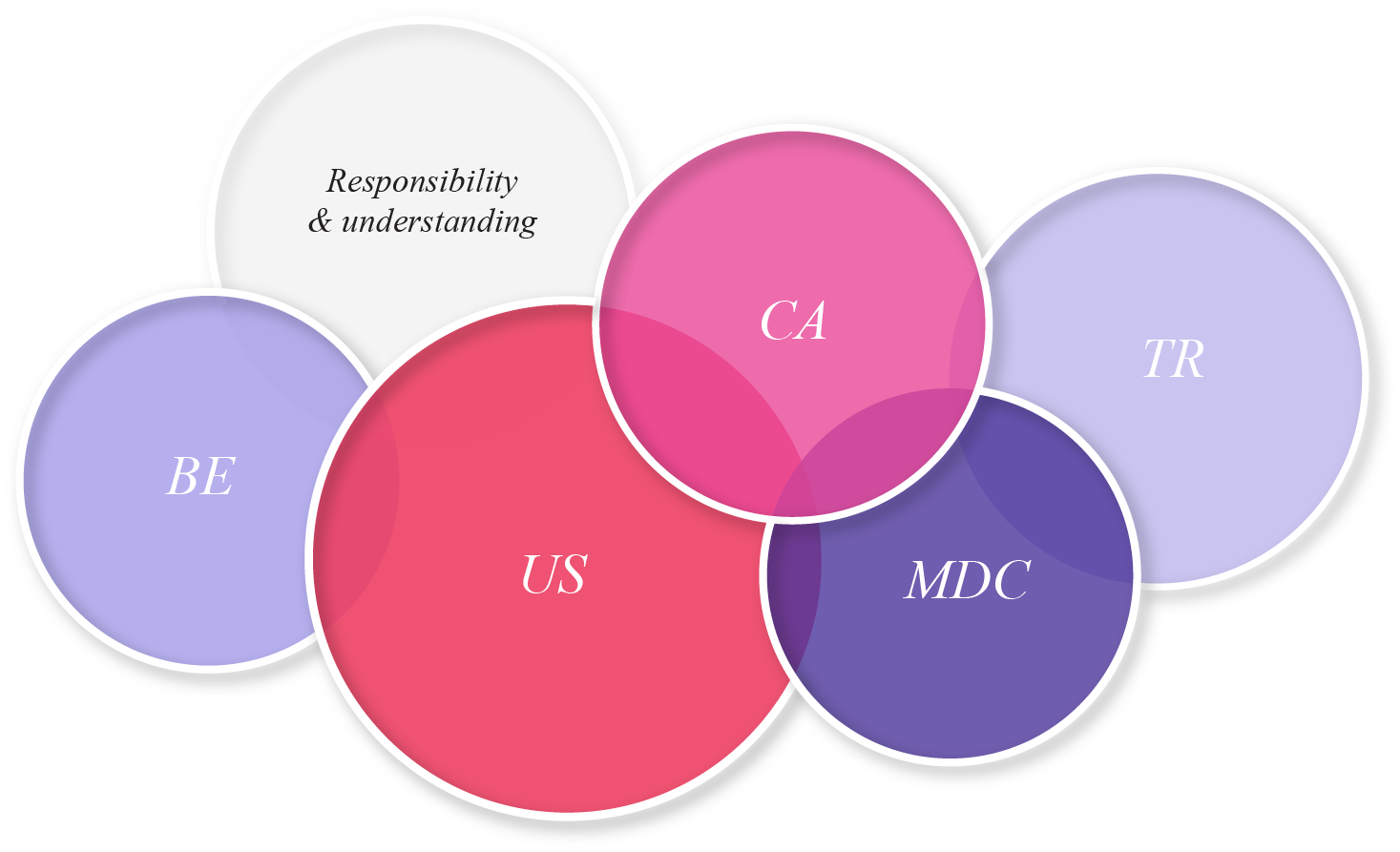
This graduation project explored the future of alarm interaction in the coronary care unit (CCU) through the lens of calm technology, requiring not only a multidisciplinary approach but a deliberate orchestration of Industrial Design’s core expertise areas. Rather than treating these domains as parallel tracks, the design process was driven by the interdependence of their underlying values, using one area to inform, challenge, or constrain another.
A deep understanding of User & Society was deliberately positioned at the heart of the project, anchoring all subsequent design decisions in the principles of Human-Centered Design. This lens ensured that every exploration, whether it be technical, aesthetic, or ethical, remained grounded in re-established human needs, serving as a solid foundation through which all other expertise areas were consequently activated and aligned.
FMP Interplay of Expertise Area’s
At the start of the Research through Design process, the technical and business dimensions of the design space revealed critical constraints shaped by European and national regulations, including the Medical Device Regulation (MDR 2017/745), which demands strict safety standards within the domains of audibility and visibility. Analyzing this imposed limitation through the interconnected lens of the various expertise areas illustrates how such regulatory conditions restrict freedom in domains like Creativity & Aesthetics, and Technology & Realization, and ultimately, or at least in part, contribute to the decades-long established phenomenon of alarm fatigue.
During the expert consultancy with Philips, it was questioned whether these restrictions could be modified, and if so, how this might be achieved to re-center the focus on alarm management on User & Society. This is possible, but only if a major organization like Philips undertakes extensive research and presents compelling evidence to regulatory authorities. As a result, this understanding prompted the development of a conceptual framework to be shared with Philips – aimed at catalyzing change within the current ecosystem and serving as a potential micro spark for meaningful progress, clearly exemplifying the Business & Entrepreneurship domain of the project.
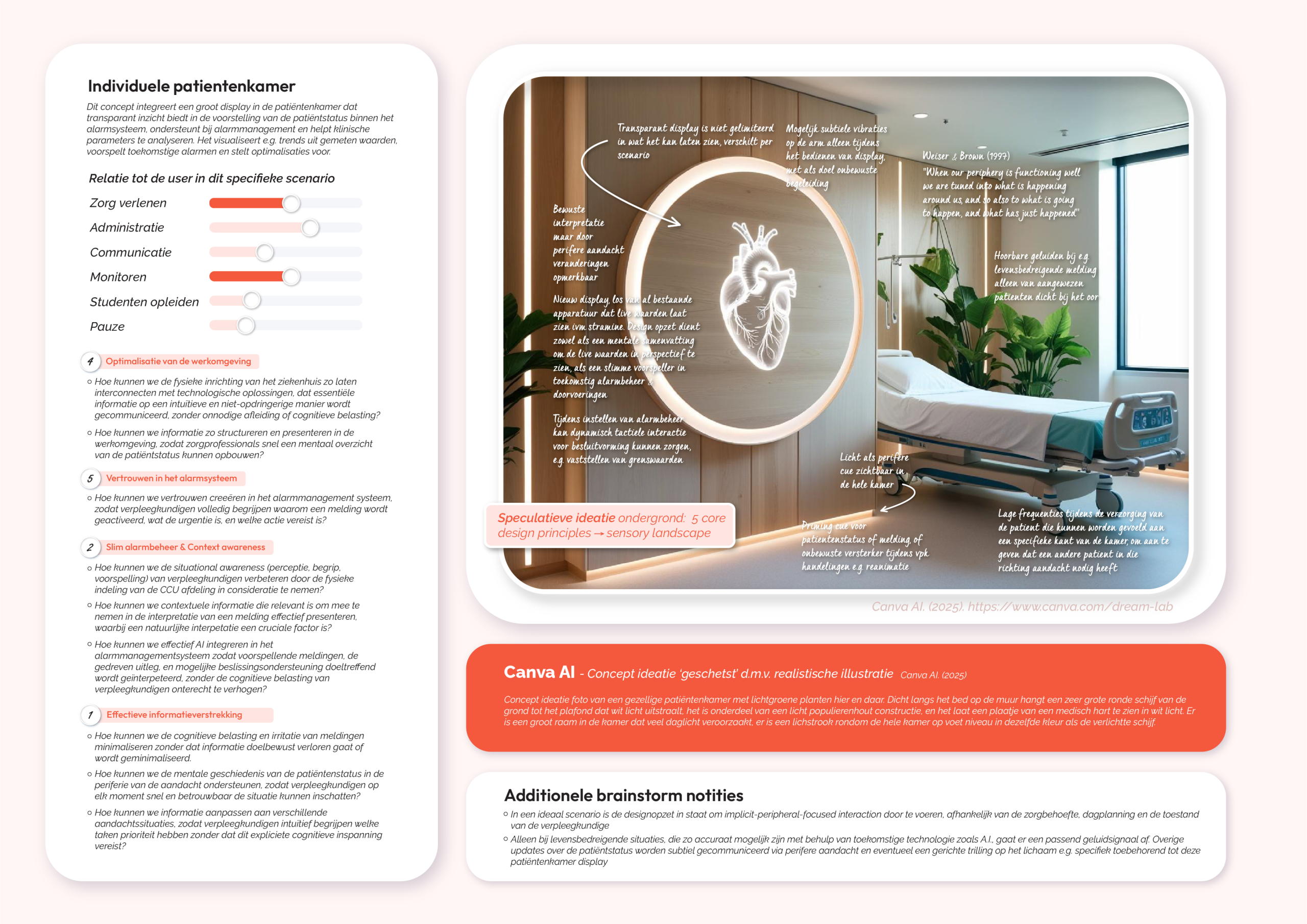
Consequently, with User & Society as the foundation, Creativity & Aesthetics, Technology & Realization, and Math, Data & Computing were applied as interconnected domains that jointly influenced both the speculative futures and the development of the exploration and prototyping stages. C&A explorations, for example, were grounded in plausible technical future scenarios, in which Artificial Intelligence encompassed a role. Simultaneously, the technically realized probes developed for co-evaluation served not only as functional artifacts but as provocations; tangible hypotheses that invited users to experience, question, and interpret the presented calm technology alarm interactions. This allowed for a direct investigation into how such technologies might influence crucial user factors such as perception, trust, and emotional response, and how their integration could meaningfully support User & Society. In turn, Math, Data & Computing, implemented within the constraints of the technological components played a key role in enabling the sensory modalities to function, allowing the probes to communicate as creatively as intended and making it possible to effectively elicit user reflection. In summary, this project demonstrates how the integrated application of Industrial Design’s core expertise areas is not only interdependent but, particularly in the context of healthcare, turned out to be pivotal in allowing aligned solutions to emerge.